
Thursday, 31 January 2013

Tuesday, 29 January 2013
Diary Entry #1
Dear Moderator,
The research into constructing film is almost completed and now I am going to work on my opening sequence research, which will include the ideas of my opening sequence and the planning. I am going to write a script, which I will hopefully follow when filming it for real and also talking about the mise-en-scene and also the camera shots I will include in my work. I am going to give you a clear outline of my opening sequence, which will be posted in the next 4-5 blogs.
The research into constructing film is almost completed and now I am going to work on my opening sequence research, which will include the ideas of my opening sequence and the planning. I am going to write a script, which I will hopefully follow when filming it for real and also talking about the mise-en-scene and also the camera shots I will include in my work. I am going to give you a clear outline of my opening sequence, which will be posted in the next 4-5 blogs.
Saturday, 26 January 2013
Comparison of 3 Films of my Genre
For my initial idea, I have decided to compare 3 well-known opening sequences of films that are related to the same genre as my opening sequence I am planning to construct. I am going to compare their similarities and differences and explore the techniques used in media, such as the use of camera, sound, mise-en-scene, use of titles, the function, the themes and finally the narrative/storylines of the opening sequence. These ideas will hopefully help me a bit further for creating my opening sequence. For each film, I am going to analyse each film and note down as many features as I possibly can, which gives me more thoughts about my own construction.

Use of Camera - The opening shot is a close-up shot of the 'Nazi Germany' flag, as shown by the swastika shown at the start. The setting of the film is introduced with an establishing shot of a major city in Germany.
Editing - Mainly continuity editing, especially cross-cutting, which cuts from the kids playing planes in the street to the housewives busy working around the house.
Use of sound - Classical music, relating back to the setting of the historical drama; 1940's. It creates a clear atmosphere of the type of film.
Mise-en-scene - The cars look old-fashioned, showing that this film is set back in time. The costume of the protagonist (waistcoat) represents the rich side. There is also a woman wearing a black dress, with white leather coat to show importance.
Narrative/typical storylines - Based on the war, due to the fact that the German army are evacuating the residents out of the city.
Themes - World War II, considering the German army, as part of the storyline.
Use of Titles - The titles are 'Fade-in' and there is no transition when it disappears. It just goes straight away. There is emphasis on the above-the-line talent and the films name, as it's titles stay on the screen longer, showing importance. The above-the-line talent titles finishes when the setting is introduced.
The Function - Introduce the setting of the scene and to also refer back to the time, when WWII happened.
There is no plot to the film just yet, which creates an effect, which allows us to follow the film and find out what the film is about.

Use of Camera - The opening sequence uses a panning shot throughout to follow the feather on it's route across the city. The setting of the film is once again introduced with an establishing shot. The opening sequence ends with a close-up of the protagonist looking at the feather.
Editing - Only occurs at the end with a match on action when the protagonist goes to get on the bus, but fades out.
Use of Sound - Gentle classical music which goes well with the flowing feather. It gives a clear atmosphere of the kind of film it is.
Mise-en-scene - The feather comes from a dove; a dove is recognized around the world as a symbol for love and peace; therefore relating to the simple yet loving nature of Forrest.
Narrative/typical storylines - The feather can also symbolize how you go through life, as this film is based on Forrest Gump reviewing his history of events throughout his life.
Themes - Deals with special needs as the character has a low IQ rate. The film expresses to people with special needs that they can achieve their goals in life.
Use of Titles - The titles are 'Fade-in' and 'Fade-out'. However, the titles stay on the same length as each other, suggesting that the cast of the film are all important in the making of the film.
The Function - Introduces the setting of the scene. It also creates affect with the fade-out at the end, as the viewer wants to find out what happens next in the film. It also introduces the protagonist of the film.


'The Boy in the Striped Pajamas' is a historical-drama film.
Editing - Mainly continuity editing, especially cross-cutting, which cuts from the kids playing planes in the street to the housewives busy working around the house.
Use of sound - Classical music, relating back to the setting of the historical drama; 1940's. It creates a clear atmosphere of the type of film.
Mise-en-scene - The cars look old-fashioned, showing that this film is set back in time. The costume of the protagonist (waistcoat) represents the rich side. There is also a woman wearing a black dress, with white leather coat to show importance.
Narrative/typical storylines - Based on the war, due to the fact that the German army are evacuating the residents out of the city.
Themes - World War II, considering the German army, as part of the storyline.
Use of Titles - The titles are 'Fade-in' and there is no transition when it disappears. It just goes straight away. There is emphasis on the above-the-line talent and the films name, as it's titles stay on the screen longer, showing importance. The above-the-line talent titles finishes when the setting is introduced.
The Function - Introduce the setting of the scene and to also refer back to the time, when WWII happened.
There is no plot to the film just yet, which creates an effect, which allows us to follow the film and find out what the film is about.

'Forrest Gump' is an epic romantic comedy-drama film.
Use of Camera - The opening sequence uses a panning shot throughout to follow the feather on it's route across the city. The setting of the film is once again introduced with an establishing shot. The opening sequence ends with a close-up of the protagonist looking at the feather.
Editing - Only occurs at the end with a match on action when the protagonist goes to get on the bus, but fades out.
Use of Sound - Gentle classical music which goes well with the flowing feather. It gives a clear atmosphere of the kind of film it is.
Mise-en-scene - The feather comes from a dove; a dove is recognized around the world as a symbol for love and peace; therefore relating to the simple yet loving nature of Forrest.
Narrative/typical storylines - The feather can also symbolize how you go through life, as this film is based on Forrest Gump reviewing his history of events throughout his life.
Themes - Deals with special needs as the character has a low IQ rate. The film expresses to people with special needs that they can achieve their goals in life.
Use of Titles - The titles are 'Fade-in' and 'Fade-out'. However, the titles stay on the same length as each other, suggesting that the cast of the film are all important in the making of the film.
The Function - Introduces the setting of the scene. It also creates affect with the fade-out at the end, as the viewer wants to find out what happens next in the film. It also introduces the protagonist of the film.

'Billy Elliot' is a drama film. This is the only film out of the 3 I have used in this task that does not have a hybrid genre.
Use of Camera - It starts off with a point-of-view shot to focus on what the boy is doing (putting the vinyl and the scratcher onto the vinyl player). It moves on to a close-up shot, then a long shot to show the boy repeatedly jumping in the air. It then cuts into a panning shot to show the boy making breakfast, which then cuts to a mid-shot and over-the shoulder shot to show his emotion and what he is looking at. Once again, it goes back to the panning shot to follow the boy running to find his nan, which follows with a mid-shot to show the boy helping the granny home. Finally, there is an establishing shot of the police with shields, as the time of the film goes back to the 'Miners Strike in 1984-85'
Editing - Continuity Editing such as a match on action (when the boy jumping on the bed goes from a close-up, to mid-shot, to long shot and when the boy runs out of the door to find his missing nan) and a shot/reverse shot (when the boy looks across his nan's bedroom to find she is not there).
Use of Sound - The song played is 'Cosmic Dancer' by T-Rex, with the lyrics giving us the idea of what the film is about.
Mise-en-scene - The shields of the riot police; used in the event of the Miners Strike. The boy's father and his older brother are coal miners out on strike.
Narrative/typical storylines - It is a tale of a young boy who turns from Boxing to Ballet. It also explores the issues of class and gender, though it resolves them only partially.
Themes - The theme of this film is the idea of realising your potential and not letting yourself be intimidate or held back by limitations relating to social labels.
Use of Titles - The titles of the film last slightly longer than the other titles used e.g. the distribution titles. This is done to show importance of the title. The title are 'Fade-in' and 'Fade-out'.
The Function - There is no plot to the film as yet, but it engages the viewer to find out what is going to actually happen, which makes the opening sequence very effective. The function is also to identify the time of the film, relating back to the riot police. It also introduces the main character of the film.
From this research, I now know the key conventions of a drama film, which includes.
- Many of the drama films have hybrid features, which shows that by this, drama films could be more effective.
- The music played for each film gives an idea on the type of film and maybe the theme.
- Drama films have fade-in/fade-out titles and also they have different durations for each titles to show some have more importance than others.
- The function of drama films are plotless, so it creates an effect to the audience to think about what will happen next.
Thursday, 24 January 2013
Film Structure - My Film
MY FILM STRUCTURE: FATHER'S SON
Act 1 - Introduces the main character (a young autistic man called Joshua) and a clue to the part of the story.
He reviews his family tree to discover he has a relative who he's never seen: his father. He opens his box of personal stuff, which lies underneath the family tree and finds a blank envelope addressed to him with no stamp. He opens the envelope and finds that it is from his unseen father. I will then use Ellipsis (...) to cut from the man sitting in the chair to him putting on his coat ready to search for his father. This reduces time e.g. 30 minutes in real life, reduced to 3 seconds in the construction. Finally, he walks out the door and down the road towards his awaited destination. This is the catalytic moment for the first act, as this is preceded by the next course of the story.
Act 2 - The confrontation throughout copes with the idea of travel and also with the idea of depression, homelessness and psychological problems. He travels by plane to get to his fathers hometown, but is cut short due to a turbulent dilemma after the plane was extremely low on fuel. The passengers, including Joshua are escorted out of the plane to the departure lounge. However, Josh suddenly realizes that his wallet is left on the plane, leaving him devastated when he can't travel via a different plane to his destination. This left Josh without any money whatsoever, so he had to travel by foot and live without food, water or shelter. The confrontation continues when Josh has a mental breakdown and starts to look for company. Finally, he finds a big, white van with one of it's back doors open, so he jumps in to get a glimpse of hope towards reaching his father. This becomes the catalytic moment for the second act, when finally, he arrives at "journey's end".
Act 3 - The resolution of the plot is when Josh contacts his dad by phone to meet him at a particular place. He waits anxiously at a park bench to witness his father for the 1st time in living memory. In the distance, a man arrives, with a similar look to Josh, asking him about his identity. Josh reveals himself and then they start to get to know each other. Josh convinces his father to move back to Weston-super-Mare so he can spend a lot more time with him. The story ends with a famous quote, before the credits roll, saying:
“No love is greater than that of a father for his son.”
This quote is taken from 'Dan Brown' from the book, 'Angels & Demons'.
Act 1 - Introduces the main character (a young autistic man called Joshua) and a clue to the part of the story.
He reviews his family tree to discover he has a relative who he's never seen: his father. He opens his box of personal stuff, which lies underneath the family tree and finds a blank envelope addressed to him with no stamp. He opens the envelope and finds that it is from his unseen father. I will then use Ellipsis (...) to cut from the man sitting in the chair to him putting on his coat ready to search for his father. This reduces time e.g. 30 minutes in real life, reduced to 3 seconds in the construction. Finally, he walks out the door and down the road towards his awaited destination. This is the catalytic moment for the first act, as this is preceded by the next course of the story.
Act 2 - The confrontation throughout copes with the idea of travel and also with the idea of depression, homelessness and psychological problems. He travels by plane to get to his fathers hometown, but is cut short due to a turbulent dilemma after the plane was extremely low on fuel. The passengers, including Joshua are escorted out of the plane to the departure lounge. However, Josh suddenly realizes that his wallet is left on the plane, leaving him devastated when he can't travel via a different plane to his destination. This left Josh without any money whatsoever, so he had to travel by foot and live without food, water or shelter. The confrontation continues when Josh has a mental breakdown and starts to look for company. Finally, he finds a big, white van with one of it's back doors open, so he jumps in to get a glimpse of hope towards reaching his father. This becomes the catalytic moment for the second act, when finally, he arrives at "journey's end".
Act 3 - The resolution of the plot is when Josh contacts his dad by phone to meet him at a particular place. He waits anxiously at a park bench to witness his father for the 1st time in living memory. In the distance, a man arrives, with a similar look to Josh, asking him about his identity. Josh reveals himself and then they start to get to know each other. Josh convinces his father to move back to Weston-super-Mare so he can spend a lot more time with him. The story ends with a famous quote, before the credits roll, saying:
“No love is greater than that of a father for his son.”
This quote is taken from 'Dan Brown' from the book, 'Angels & Demons'.
Film Structure - Film 2

TITANIC:

 Act 1 - The beginning of the film shows one of the protagonists of the film: Rose Dawson Calvert at the age of 100 (Gloria Stuart). A team of treasure hunters goes to explore the wreck of the Titanic, searching for a valuable diamond necklace called 'Heart of the Ocean'. Instead, they find a sketch of a nude woman wearing it, dating April 14th 1912, the day when Titanic struck the iceberg. Rose Dawson Calvert claims that she is the woman in the picture, so she goes to visit the crew. When asked if she knows the whereabouts of the necklace, Rose recalls her time aboard the Titanic. As she tells her story, she has flashbacks of her time on the Titanic, which shows a younger Rose Dawson Calvert, played by Kate Winslet, boarding the Titanic. During her time, she meets a keen artist called Jack Dawson, who stops her from jumping off the ship's stern. Jack and Rose starts to develop a tentative friendship, which turns into love. As daylight came to an end, they go to Rose's stateroom, where she asks Jack to draw her nude. Afterwards, they evade Cal's bodyguard, who catches Jack inside her stateroom and makes love inside a car in the ship's cargo hold. As they go back upstairs to the outside, they witness that the Titanic collides with an iceberg, which causes a big hole at the end of the ship. This is the catalytic moment of Act 1.
 Act 2 - The main part of the film is when the Titanic starts to sink lower and lower into the sea. All of the passengers are encouraged to put their lifebelts on, to help them keep afloat when in the water. The women and children are sent to different smaller boats where they can get away from the disaster and feel safe. As the Titanic sinks more, it breaks in half, causing one side of the boat to fall back in place on to the sea. However, the ship then becomes vertical and starts to go down to the bottom of the sea, with the passengers following. This is the catalytic moment of Act 2.
  Act 3 - The film concludes when Jack dies and Rose tries to get to safety, when whistling a small boat that goes past her. This follows by the return of the older Rose. With her story now complete, Rose goes along the stern to the crew's ship. There she takes out the diamond and throws it into the sea. Wile asleep in her bed, the photos on her dresser are a visual chronicle that she lived a free life, as inspired by Jack. Finally, the young Rose is reunited with Jack, applauded and congratulated by those who perished on the ship.
Film Structure - Film 1
The film structure I will use for my research in to films is the 'Three-act structure'. It is a model used in writing and evaluating modern storytelling, which divides a screenplay into 3 parts: the setup, the confrontation and the resolution.

The diagram above gives the idea about what the 3 acts consist of and when they happen.
Act 1 (Setup) - introduces the main characters and sets up the conflict that is the story of the film. The end of the act shows something significant that happens, which changes the courses of the story.
Act 2 (Confrontation) - explores the consequences of the catalytic moment. It asks the questions 'What happens?', 'What complications arise?', 'How does it affect the characters?' and 'What are the possible outcomes?'.
Act 3 (Resolution) - resolves the story and tells us the outcome. It must tie-up all the loose ends and should ensure that we understand what the story is about.
I will research 2 films and I will include my own structure for my own film The first film I will research is the 2005 thriller film 'Flightplan'
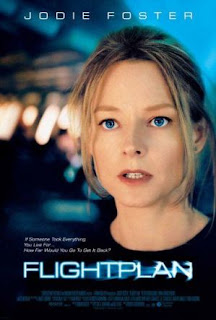
FLIGHTPLAN:
This film tells the story of a middle-aged woman, who goes on holiday to New York with her 6 year old daughter. However, the child goes missing somehow and the protagonist goes on a hunt around the airplane to find the missing girl.
Here is the storyline:
 Act 1 - The beginning of the film introduces the main characters of the film: Kyle Pratt (Jodie Foster) and her daughter Julia Pratt (Marlene Lawston). This tells the rest of the act by where they are set. It sets at a train station, then Kyle's house and then finally at the airport. The protagonists then board the plane, with the daughter sitting next to the window. Then comes the catalytic moment when Kyle and Julia falls asleep; Kyle then wakes up and finds out that Julia had gone missing. This is the plot point of the story, which changes the atmosphere rapidly.

Act 2 - The main part of the film is when Kyle goes in search for her missing daughter, who had disappeared without a trace.

 Kyle suddenly panics more and more, as the cabin crew doesn't believe her about what she is trying to tell them about her mussing daughter. This follows by a scene of bloody violence, which is the catalytic moment of this act. This is the longest moment of the film, lasting about an hour. This makes the viewer think what will the outcome be and will she find her daughter. Will it all be resolved?
 Act 3 - The film concludes when Kyle finds her daughter unconscious at the front of the plane. She carries her out and are taken away in a van for safety. Finally, the film ends with Julia saying 'Are we there yet?' referring to the holiday.

The diagram above gives the idea about what the 3 acts consist of and when they happen.
Act 1 (Setup) - introduces the main characters and sets up the conflict that is the story of the film. The end of the act shows something significant that happens, which changes the courses of the story.
Act 2 (Confrontation) - explores the consequences of the catalytic moment. It asks the questions 'What happens?', 'What complications arise?', 'How does it affect the characters?' and 'What are the possible outcomes?'.
Act 3 (Resolution) - resolves the story and tells us the outcome. It must tie-up all the loose ends and should ensure that we understand what the story is about.
I will research 2 films and I will include my own structure for my own film The first film I will research is the 2005 thriller film 'Flightplan'

FLIGHTPLAN:
This film tells the story of a middle-aged woman, who goes on holiday to New York with her 6 year old daughter. However, the child goes missing somehow and the protagonist goes on a hunt around the airplane to find the missing girl.
Here is the storyline:


Act 2 - The main part of the film is when Kyle goes in search for her missing daughter, who had disappeared without a trace.


Monday, 21 January 2013
Audience Research 4/4
4) Marketing Strategy
For this task, I am going to research different marketing strategies for a film/films with the same genre as me and find out what elements to include when marketing my film. I am going to list as many types of marketing strategies, which match the genre of my film and the age range/gender, of course, it's 45-54 year old women.
I have decided to look at the film 'Jane Eyre' because it is targeted mostly to the 45-54 year olds, according to the 'BFI Statistical Yearbook' and comes under the genre of drama.

Posters, such as this one above ^, are one of several techniques used to market the film to the public.
These posters can be spread in a lot of places, such as on a billboard, at bus stops, magazines and also outside of a cinema; the more places shown, the more interest it gives to the general public. Big budget films need a lot of posters in many places to give a lot more of the public an interest to go and see this film. If they are everywhere, people would go and see that film to see why the film is so good and populated by the viewer. This is a good idea for my target audience, as a drama film is becoming very popular.
Film criticism can also determine whether the target audience want to watch the film or not. The examples of the reviews in the poster above ^ are rated 4/5 stars, which makes the film worthy to watch. It also shows the critics opinion of the film, which also encourages the target audience to watch the film and enjoy it.
For this task, I am going to research different marketing strategies for a film/films with the same genre as me and find out what elements to include when marketing my film. I am going to list as many types of marketing strategies, which match the genre of my film and the age range/gender, of course, it's 45-54 year old women.
I have decided to look at the film 'Jane Eyre' because it is targeted mostly to the 45-54 year olds, according to the 'BFI Statistical Yearbook' and comes under the genre of drama.

Posters and Reviews:
Posters, such as this one above ^, are one of several techniques used to market the film to the public.
These posters can be spread in a lot of places, such as on a billboard, at bus stops, magazines and also outside of a cinema; the more places shown, the more interest it gives to the general public. Big budget films need a lot of posters in many places to give a lot more of the public an interest to go and see this film. If they are everywhere, people would go and see that film to see why the film is so good and populated by the viewer. This is a good idea for my target audience, as a drama film is becoming very popular.
Film criticism can also determine whether the target audience want to watch the film or not. The examples of the reviews in the poster above ^ are rated 4/5 stars, which makes the film worthy to watch. It also shows the critics opinion of the film, which also encourages the target audience to watch the film and enjoy it.
Subscribe to:
Posts (Atom)